The Question on the Table
Hoax or history. It’s not a small question. If a first-century rabbi actually walked out of his own tomb, that changes the shape of reality. If his followers made it up, or got it wrong, then a religion with billions of adherents is built on a mistake.
The resurrection is one of the most-examined claims in human history, and the evidence is more interesting than most people on either side realize. This article walks through the strongest objections, what they actually hold up against, and where a fair reading of the record leaves you.
What Reasonable People Object To
Skeptics aren’t being unreasonable when they push back on the resurrection. The claim is enormous, and people who care about truth ask hard questions before believing enormous things. Here are the four objections that come up most often, presented as their strongest defenders would put them.
Objection 1: The disciples made it up
The disciples had every motive to invent the story. Their teacher had been executed, the movement was collapsing, and they were facing irrelevance. Inventing a resurrection, or letting a legend grow over the decades, would have been the obvious way to keep the cause alive. Over time, the embellishments hardened into the Gospel accounts we have today. What we’re really looking at is a grief-driven myth that grew in the telling.
Objection 2: Jesus didn’t actually die
Crucifixion was brutal, but it didn’t always kill quickly. Jesus may have lost consciousness on the cross, been mistaken for dead, and revived in the cool of the tomb. When he reappeared to his followers, bandaged and weakened but alive, they interpreted it as resurrection. This is the “swoon theory,” and it has the appeal of explaining the empty tomb and the appearances without requiring a miracle.
Objection 3: The Gospel accounts contradict each other
Read the four Gospels side by side and the resurrection narratives don’t line up cleanly. How many women went to the tomb? One angel or two? Where did Jesus first appear, Jerusalem or Galilee? If the resurrection actually happened, the people closest to it should be able to tell the same story. The disagreements suggest the writers were working from rumor, memory, or invention rather than reporting fact.
Objection 4: Mass hallucination explains the appearances
Grief produces visions. Bereaved spouses report seeing their dead loved ones at startlingly high rates. Add the trauma of watching a leader executed, the closeness of a small group, and the religious expectation that something would happen, and you get the conditions for shared psychological experiences that felt real to those involved but weren’t.
Why Each Objection Doesn’t Hold
These objections deserve to be examined honestly. Each one has been examined by historians, including ones who started out hoping to confirm them. Here’s what they ran into.
On “the disciples made it up”
People will die for things they believe to be true. They rarely die for things they know to be lies. The earliest disciples were executed, exiled, and tortured for claiming Jesus had risen, and not one of them is recorded as having recanted to save their own life. That doesn’t prove the resurrection happened, but it makes deliberate fabrication hard to sustain.
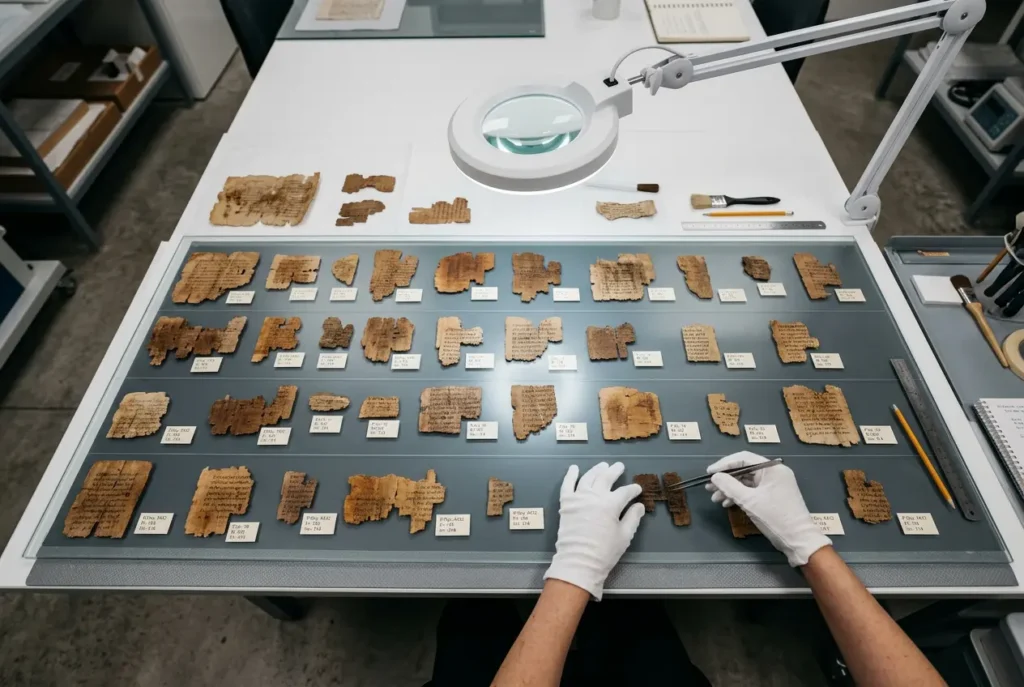
The “legend that grew over time” version runs into a different problem: the timeline. The earliest written reference to the resurrection appearances is in Paul’s first letter to the Corinthians (1 Corinthians 15:3–8), and the creed Paul cites there is dated by most scholars, including secular ones like Bart Ehrman, to within a few years of Jesus’s death. That’s not enough time for legend to displace living memory.
On the swoon theory
This one collapses on the medical evidence. Roman crucifixion was designed to kill, and the executioners were professionals. The Gospel of John reports that a soldier pierced Jesus’s side and that “blood and water” came out, a detail consistent with what modern pathologists describe as pleural effusion in a crucifixion victim, which only forms after death.
Even the 19th-century skeptic David Friedrich Strauss, who did not believe in the resurrection, dismissed the swoon theory in The Life of Jesus Critically Examined (1835). His point was simple: a man who had survived crucifixion in the state Jesus would have been in could not possibly have convinced his followers he was the conqueror of death.
On the contradictions
The differences between the Gospel accounts are real, but they cut the opposite direction from what the objection assumes. In legal and historical work, accounts that match perfectly raise the suspicion of collusion. Independent witnesses always vary in detail. The Gospels agree on the central facts (empty tomb, women as first witnesses, multiple appearances in multiple settings) and diverge on peripheral details. That is exactly the pattern historians expect from genuine independent testimony.
The fact that all four accounts name women as the first witnesses is itself significant. In the first-century Jewish and Roman world, women’s testimony carried little legal weight. If you were inventing a story to convince that culture, you would not have built it on female witnesses. The detail is there because it’s what happened.
On mass hallucination
Hallucinations are individual experiences. They don’t transfer between people. Two people standing next to each other don’t have the same hallucination, and groups of five hundred (1 Corinthians 15:6) certainly don’t. The post-resurrection appearances reported in the New Testament happened to individuals, small groups, and crowds, in different locations, indoors and outdoors. Some of the people involved had no psychological predisposition to see Jesus alive. James, Jesus’s skeptical brother, was one. Paul, who was actively persecuting Christians, was another. The hallucination theory has to explain too much, with too few of the conditions psychologists know produce hallucinations.
What the Evidence Actually Shows
Strip the question down to what historians of all stripes actually grant, and four facts emerge that any honest reconstruction has to account for.
One: Jesus was crucified and died. Virtually no historian disputes this, including skeptical ones. Bart Ehrman, the agnostic New Testament scholar at the University of North Carolina, treats the crucifixion as one of the most secure facts in ancient history in his book Did Jesus Exist? (2012). It’s reported in all four Gospels, in Paul’s letters, and by non-Christian sources including the Roman historian Tacitus and the Jewish historian Josephus.
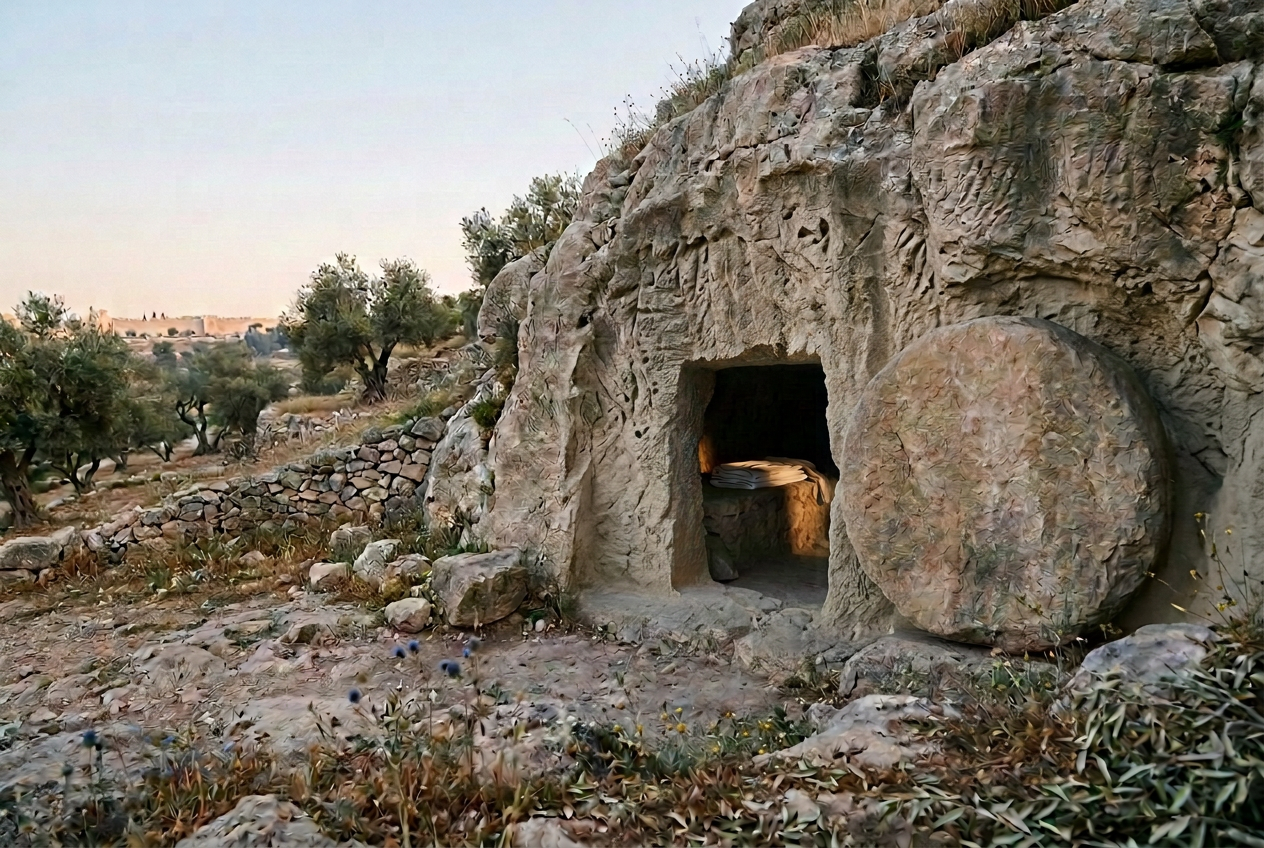
Two: His tomb was found empty. Historian Gary Habermas’s long-running survey of scholarly literature on the resurrection finds that a substantial majority of scholars writing on the question affirm the empty tomb. The strongest indirect evidence is what the early opponents of Christianity didn’t say. The earliest counter-explanation circulated by Jewish authorities, recorded in Matthew 28, was that the disciples had stolen the body. That’s not a denial of the empty tomb. It’s an admission of it.
Three: The disciples genuinely believed they had seen Jesus alive. Even Ehrman, who does not believe the resurrection happened, has stated that the earliest followers of Jesus believed they had encountered him bodily after his death. They believed they saw him, touched him, heard him. Whatever you think actually happened, this much is granted across the academic spectrum.
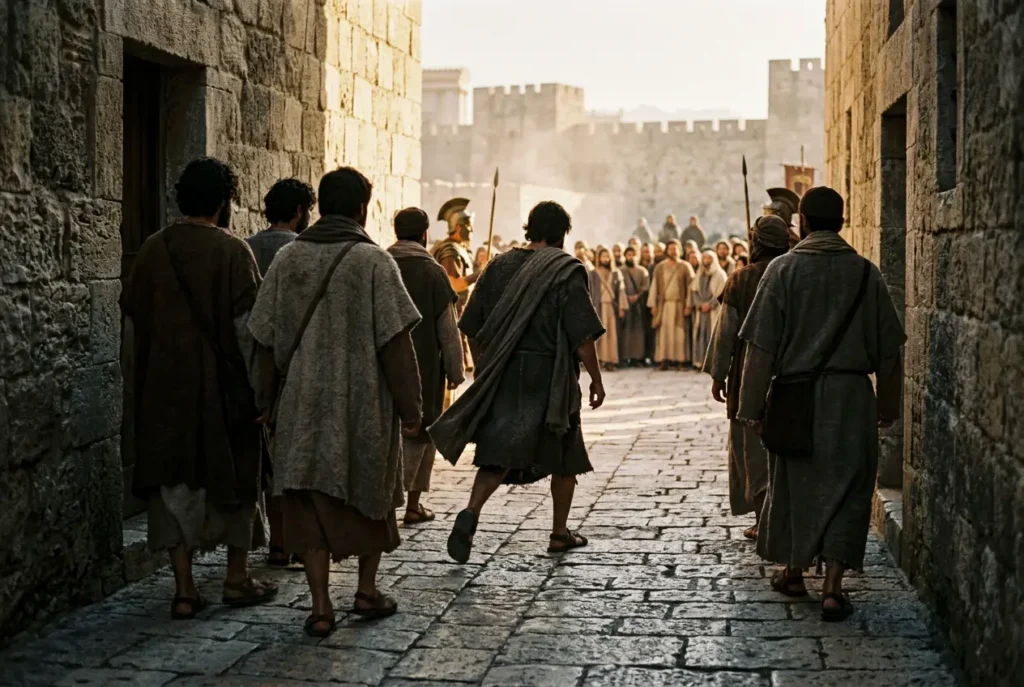
Four: People who had no business converting, converted. James, Jesus’s brother, was a skeptic during Jesus’s lifetime. After the crucifixion, he became a leader of the Jerusalem church and was eventually executed for his belief in his brother’s resurrection. Paul of Tarsus was actively hunting and arresting Christians when, by his own account, he encountered the risen Jesus on the road to Damascus. He spent the rest of his life enduring imprisonment, beatings, and finally execution to spread the message he had been trying to destroy. Hostile skeptics don’t usually become martyrs for the cause they were attacking, unless something happened to change their minds.
These four facts are what any explanation has to account for: the death, the empty tomb, the appearances, and the transformations. The naturalistic theories (fraud, swoon, legend, hallucination) each fail to explain at least one of them. The resurrection explains all four.
That’s the historical case. It doesn’t bypass the supernatural; it walks straight into it. But it walks in on the basis of evidence, not blind belief.
The Reasonable Conclusion
A reasonable person, examining what historians actually grant about the death of Jesus and the events that followed, has to do something with the four facts on the table. The naturalistic alternatives have been tried and have not held up. They explain pieces of the picture but not the whole.
The resurrection is the only explanation that accounts for all of it: the death, the empty tomb, the appearances, and the transformed lives of people who had nothing to gain and everything to lose. That doesn’t make it easy to accept. It makes it the most reasonable conclusion available given the evidence.
You can reject that conclusion. People do, and they have reasons. But it has to be a conscious rejection, not a casual dismissal. The question is a real one, and the historical record gives a real answer.